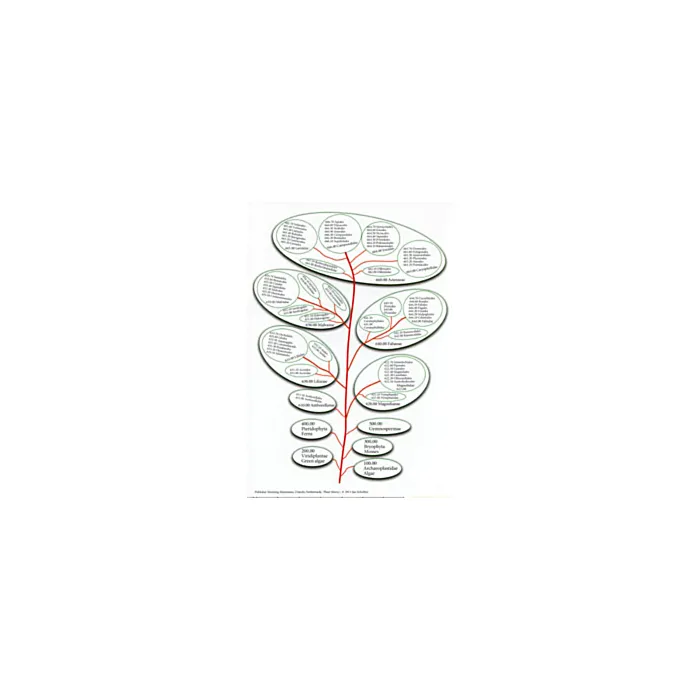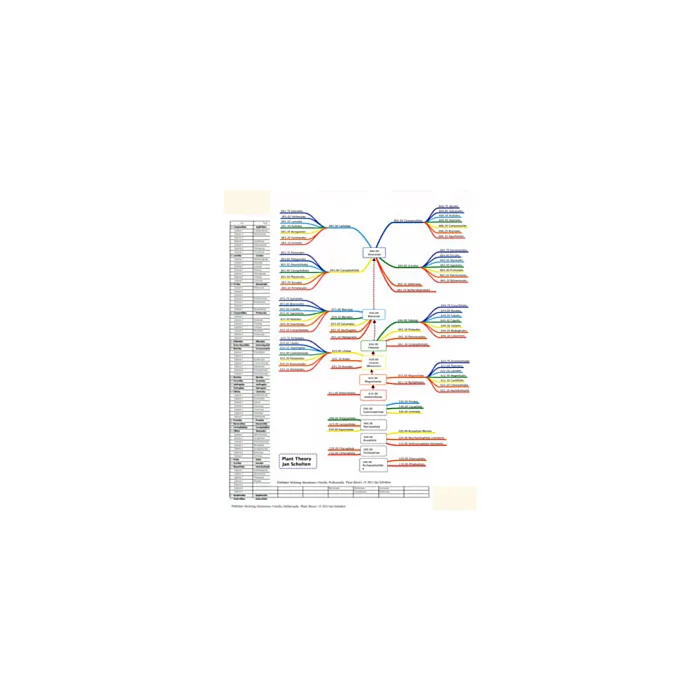
This book describes the use of plants in homeopathy. The Plant theory is described, which gives a Periodic System of the Plant kingdom. The Plant theory is based on the Apg3 classification, the botanical classification mostly accepted by botanists. The Plant theory allows precise differential diagnosis of plants and prediction of remedy pictures of specific plants.
The Plant theory allows precise differential diagnosis of plants and prediction of remedy pictures of specific plants.
I think this is a magnificent book, its scope and depth of research and thought are extraordinary. It provides a wonderful blueprint for others to build on in the future. John Summerville
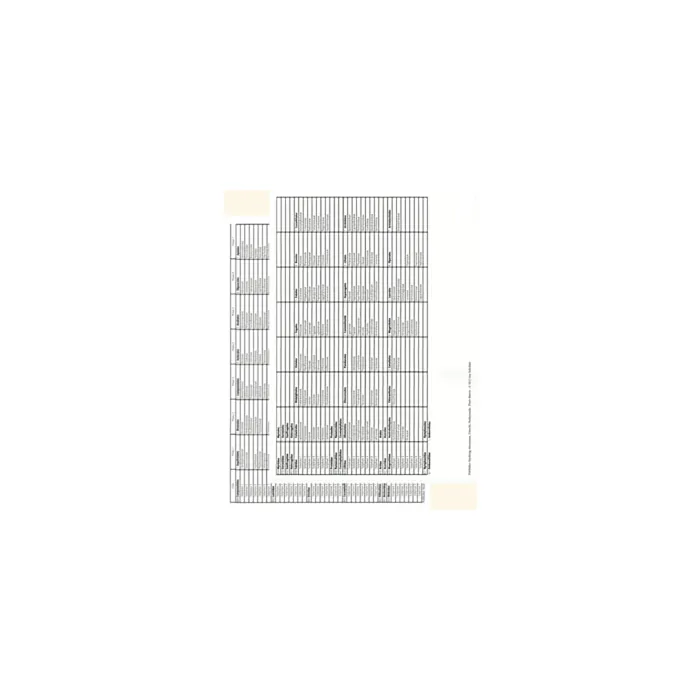
What is different about this book is that, although other current books discuss plant remedies in families and modern classifications, here we set them out in their classification grouping, rather than alphabetically as in a Materia Medica. This way we can see the themes running through the various levels of the different orders. This gives us an overview similar to what we get from viewing the remedies in the periodic table of the elements according to their series and stage.
This has been a major task of compilation following extensive experience in the clinic and the input of many people. But it is only a beginning. More information will be added as we discover it, and details will be refined as they become clear. And you, the reader, can help in this task by sending in your experiences too! (Roger savage)
I think this is a magnificent book, its scope and depth of research and thought are extraordinary. It provides a wonderful blueprint for others to build on in the future. (John Summerville)
€ 106,00
Please note: Our books are now sold exclusively through Emryss.
Click the ‘Buy on Emryss’ button on any book page to be redirected to the correct order page on Emryss.com
If you are not redirected to the book page please contact us. Maybe that book is already sold out.
Summary
Wonderful Plants
This book describes the use of plants in homeopathy. The Plant theory is described, which gives a Periodic System of the Plant kingdom. The Plant theory is based on the Apg3 classification, the botanical classification mostly accepted by botanists.
The Plant theory allows precise differential diagnosis of plants and prediction of remedy pictures of specific plants.
I think this is a magnificent book, its scope and depth of research and thought are extraordinary. It provides a wonderful blueprint for others to build on in the future. John Summerville
What is different about this book is that, although other current books discuss plant remedies in families and modern classifications, here we set them out in their classification grouping, rather than alphabetically as in a Materia Medica. This way we can see the themes running through the various levels of the different orders. This gives us an overview similar to what we get from viewing the remedies in the periodic table of the elements according to their series and stage.
This has been a major task of compilation following extensive experience in the clinic and the input of many people. But it is only a beginning. More information will be added as we discover it, and details will be refined as they become clear. And you, the reader, can help in this task by sending in your experiences too! – Roger savage
I think this is a magnificent book, its scope and depth of research and thought are extraordinary. It provides a wonderful blueprint for others to build on in the future. – John Summerville
Publication data
Title: Wonderful Plants
Author: Jan Scholten, M. D.
www.janscholten.com
ISBN: 978-90-74817-20-2
Edition: 3; April 2018
Review: Carolyn Burdet
Deborah Collins
Roger Savage
John Summerville
Sally Williams
Cover: Painting “Wonderful Plants”
Maria Davits
Cover design: Hans van Dussen
Lay-out: Hans van Dussen
Foreword: Louis Klein
Pieter Kuiper
Publisher: Stichting Alonnissos
Servaasbolwerk 213
3512 NK Utrecht
The Netherlands
Telephone: 003230234
mail@alonnissos.org
www.alonnissos.org
Printer:
Bariet Ten Brink
Meppel
The Netherlands
665.55 Lamiaceae
Series: Hydrogen, Carbon, Silicon, Iron, Silver series and Lanthanides; emphasis on Silver series.
Clades: Lamiaceae; Lamiales; Lamiidae.
Phase: 5; Subphase: 5.
Dutch: Lipbloemigen.
Botany: Lamiales; stem quadrangular; aromatic; inflorescence verticillate; flowers bilabiate; style gynobasic; ovary 4 locules; fruit 4 nutlets.
Use: spices.
Source: Rob Peters, Interhomeopathy, March 2011.
Taxonomy
In the Apg3 classification Lamiaceae is a Family in Lamiales. Dicrastylidaceae and Symphoremataceae are included in Lamiaceae.
In the Plant theory Verbenales is split off from Lamiales. Lamiaceae is in Subphase 5 in Lamiales.
Introduction
There is a quality of overdoing, like Phosphorus with friends and Nitrogen with the enjoyment of life. It indicates Phase 5 and Subphase 5.
They are highly strung, overstrung, overstimulated. They want everything from life at the same time. They want to achieve in their studies and job and want to have special, rewarding and artistic work. They want to make money to have a good life and be able to enjoy it with others. They want to have many friends and good connections with all of them. They need a good relationship, which has to warm, with good conversations and sex. They need to have a good body so they have to exercise and play sports. It is all too much. Students especially can get into the situation of exhaustion because of studying, having a job and needing to have connections, wanting to go to the cinema with all their friends, needing time for their boyfriend and having to go to exercise. On top of that they want to be autonomous and independent, making their own money and being independent from relationships. A typical ending is in mononucleosis.
They are very cheerful and friendly, easily making contact and having many friends. Friends are essential in their life. They like the connection, but also need the appreciation and recognition that they are doing well and achieving in life. People easily fall in love with them because they are so open.
Mind
Cheerful, excited, > being with friends, company, > appreciation, recognition.
Active, hurried, impatient, busy.
Sad, depressed, < alone, < humiliation.
Desire autonomy, freedom, independence.
Profession: public relation worker; commercials; artist, scientist.
Ailments from overwork, being bullied.
Fear: having no friends.
General
Sensation: pricking, stitching as from 1000 fine needles.
Desire: vinegar, vegetables; chocolate.
Body
Infection: mononucleosis; bacteria, virus.
Nervous: spasm, cramps.
Head: headache.
Nose: hayfever.
Throat: hyperthyreoidism.
Lungs: asthma; bronchitis.
Heart: palpitations; pulse fast, nervous.
Lamiaceae Stages
1. Mentha piperita
1. Mentha aquatica
1. Mentha arvensis
1. Mentha pulegium
1. Mentha spicata
1. Mentha rotundifolia
1. Mentha longifolia
2. Micromeria douglasii
4. Ocimum basilicum
4. Ocimum tenuiflorum
4. Ocimum americanum
4. Ocimum gratissimum
5. Glechoma hederacea
5. Clerodendrum infortunatum
6. Stachys palustris
6. Leonurus sibiricus
6. Leonurus cardiaca
6. Marrubium vulgare
6. Nepeta cataria
6. Stachys officinalis
7. Monarda didyma
7. Monarda punctata
7. Monarda fistulosa
7. Phlomis fructicosa
8. Plectranthus amboinicus
8. Plectranthus scutellarioides
8. Plectranthus fruticosus
8. Plectranthus barbatus
9. Hyssopus officinalis
9. Lycopus europaeus
9. Lycopus americanus
10. Origanum majorana
10. Origanum dictamnus
10. Origanum vulgare
11. Rosmarinus officinalis
11. Pogostemon cablin
12. Melissa officinalis
12. Lamium album
12. Melittis melissophyllum
13. Lavandula angustifolia
13. Teucrium marum
13. Teucrium scordium
13. Teucrium chamaedrys
13. Teucrium scorodonia
13. Teucrium botrys
14. Scutellaria lateriflora
14. Vitex agnus-castus
14. Scutellaria galericulata
14. Sideritis hyssopifolia
15. Salvia officinalis
15. Galeopsis segetum
15. Salvia sclarea
15. Salvia verbenaca
15. Vitex negundo
15. Vitex trifolia
15. Salvia divinorum
16. Ballota nigra
16. Satureja hortensis
16. Vitex pinnata
16. Clerodendrum trichotomum
17. Lycopus virginicus
17. Orthosiphon aristatus
17. Brunella vulgaris
17. Clinopodium grandiflorum
This book describes the use of plants in homeopathy. The Plant theory is described, which gives a Periodic System of the Plant kingdom. The Plant theory is based on the Apg3 classification, the botanical classification mostly accepted by botanists. The Plant theory allows precise differential diagnosis of plants and prediction of remedy pictures of specific plants.